Dela AI Chatbot
An AI Assistant that does real work and helps users get through complex workflows faster. Built to be useful, not a demo.
Overview
Deltek's Polaris workflows are genuinely complex. Dela is an AI assistant I led the design direction for, with one non-negotiable: it had to make that work measurably faster, not just sit in the corner as an "AI-powered" checkbox for sales decks. That meant designing it around users' actual tasks. It had to guide through multi-step workflows, answer "how do I…?" in context, and surface the right capability at the moment it's needed.
Problem
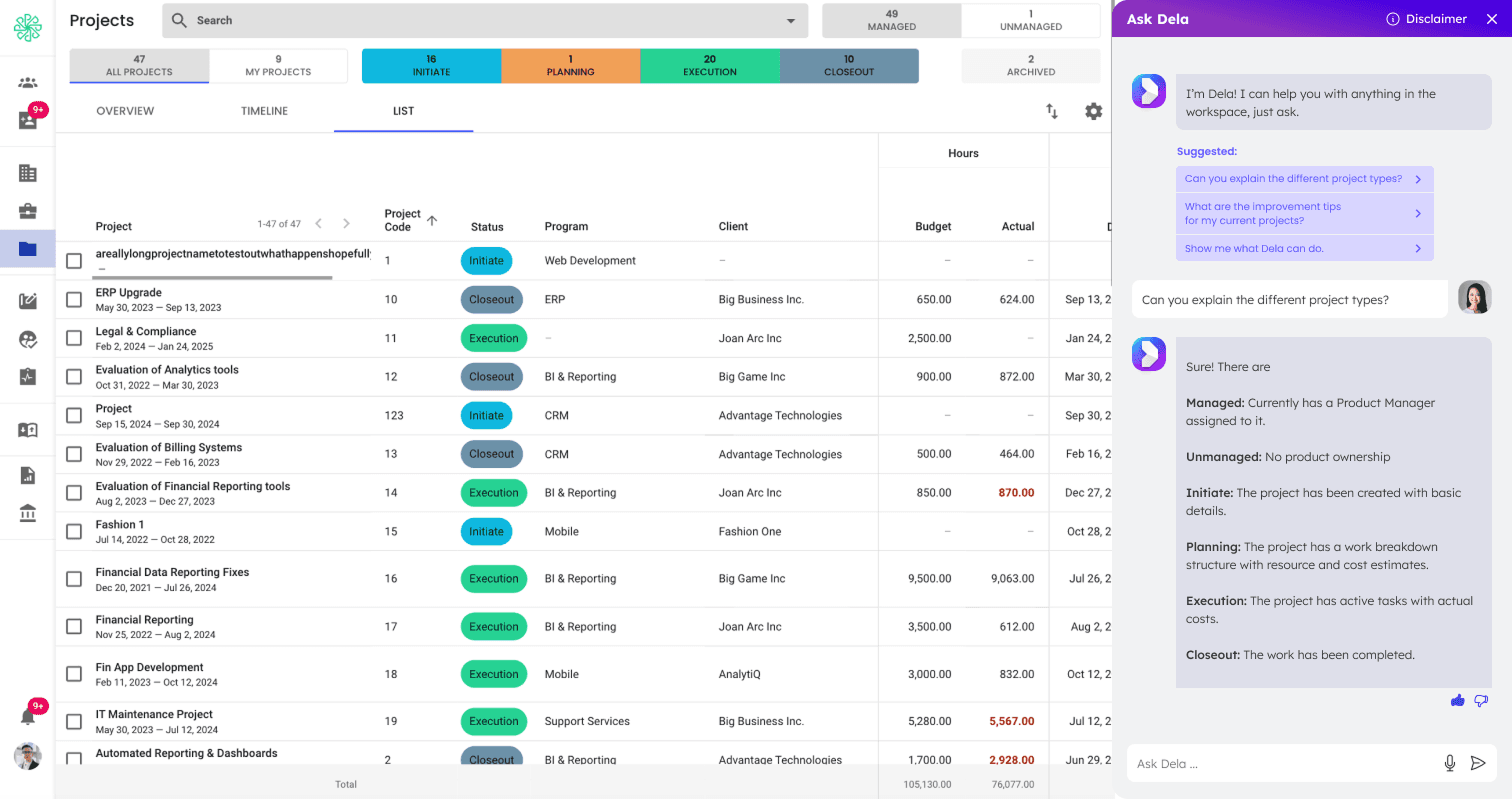
Complex enterprise workflows have a real cost: Resource planning, for example, can be a multi-step process involving requesting, proposing, fulfilling, and proper utilization. Steps were spread across screens and for longtime customers this became more common knowledge, but we still received support tickets for things the product could already do and features users were paying for but never adopted. Documentation and tooltips weren't closing the gap, and every AI-assistant reference point users had was a gimmick, which meant Dela's first job was earning the right to be used twice.
Why an assistant here (and not elsewhere)
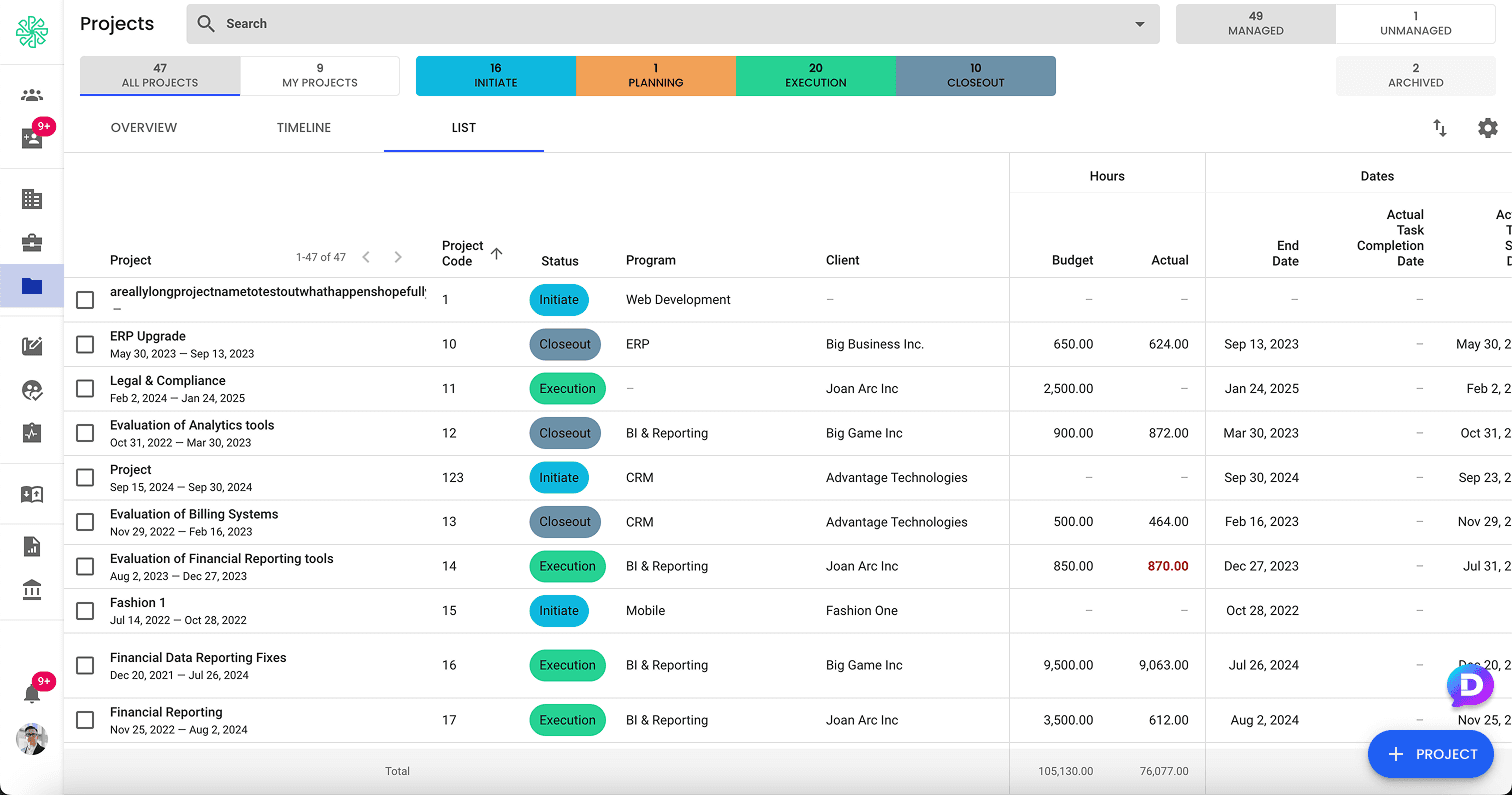
On the Profiles project I rejected a conversational approach. A structured, predictable task wants embedded assistance, not a chat window. Dela's territory is the opposite: workflows with many paths, where users know their goal ("get this project set up," "find out why this report is off") but not the route. When the user's intent is the only map you have, conversation is the right interface. The rule I ended up with: Who holds the map. Inline AI works when the product can predict what the user needs from context. Conversation works when only the user knows what they're after.
Key decisions
Useful beats impressive. The success metric I designed against was task completion time, not engagement. Setting up a basic project, building the task tree, sequencing dates, figuring out what resources it needed, could take 30 minutes or more. With Dela, a PM could describe what needed to be done and by when, and have the project set up in under 5 minutes.
Not Clippy. An assistant that interrupts is worse than no assistant. I wanted Dela to provide the most value to users when needed without annoying them. During testing, the regular timer-based popup chat was quickly dismissed, leading to Dela not being utilized unless they intended to from the start. Instead, I started using a combination of dismissible banners and in-line Dela launch icons to keep it quiet and let the user know where Dela could help.
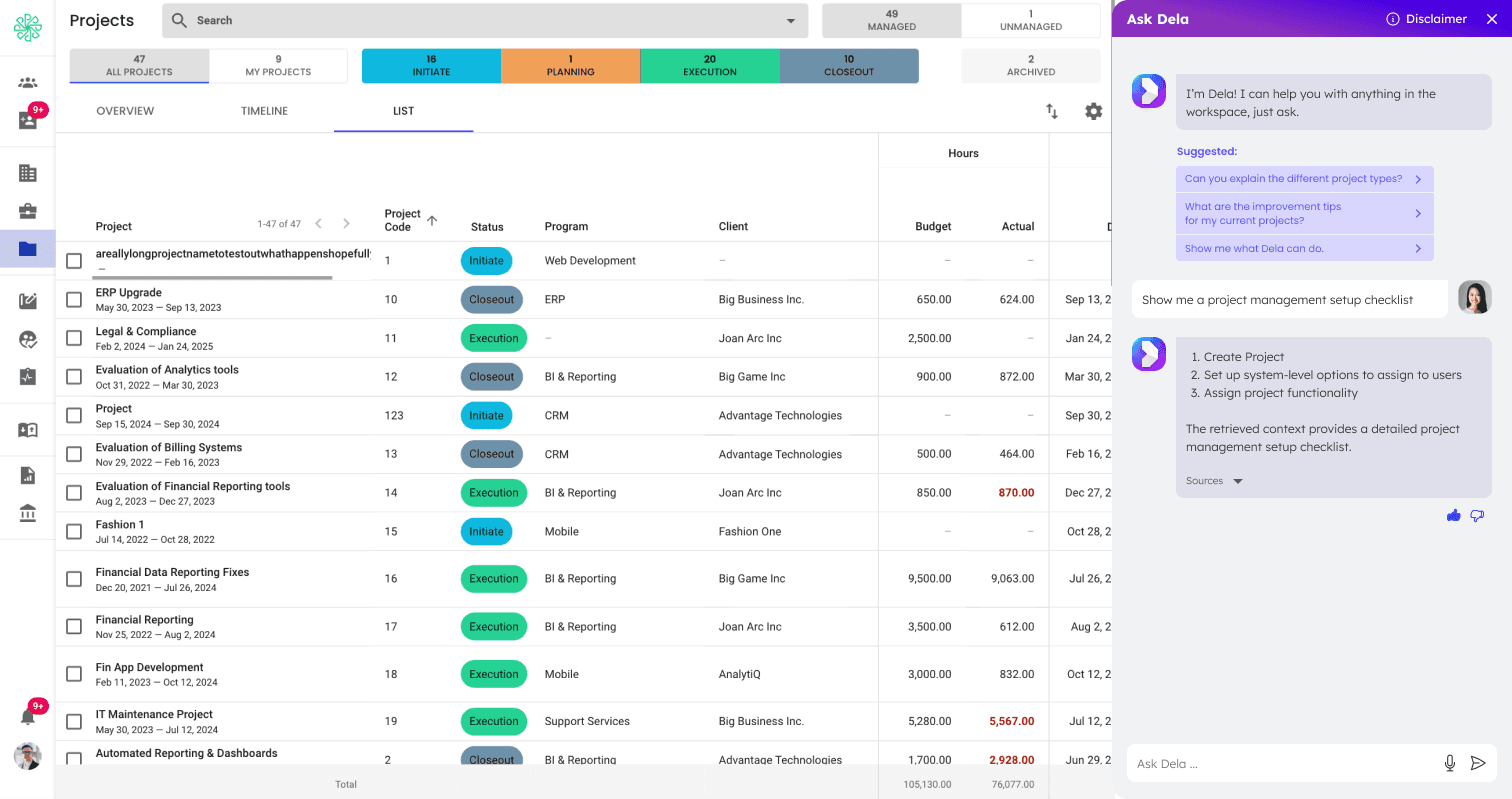
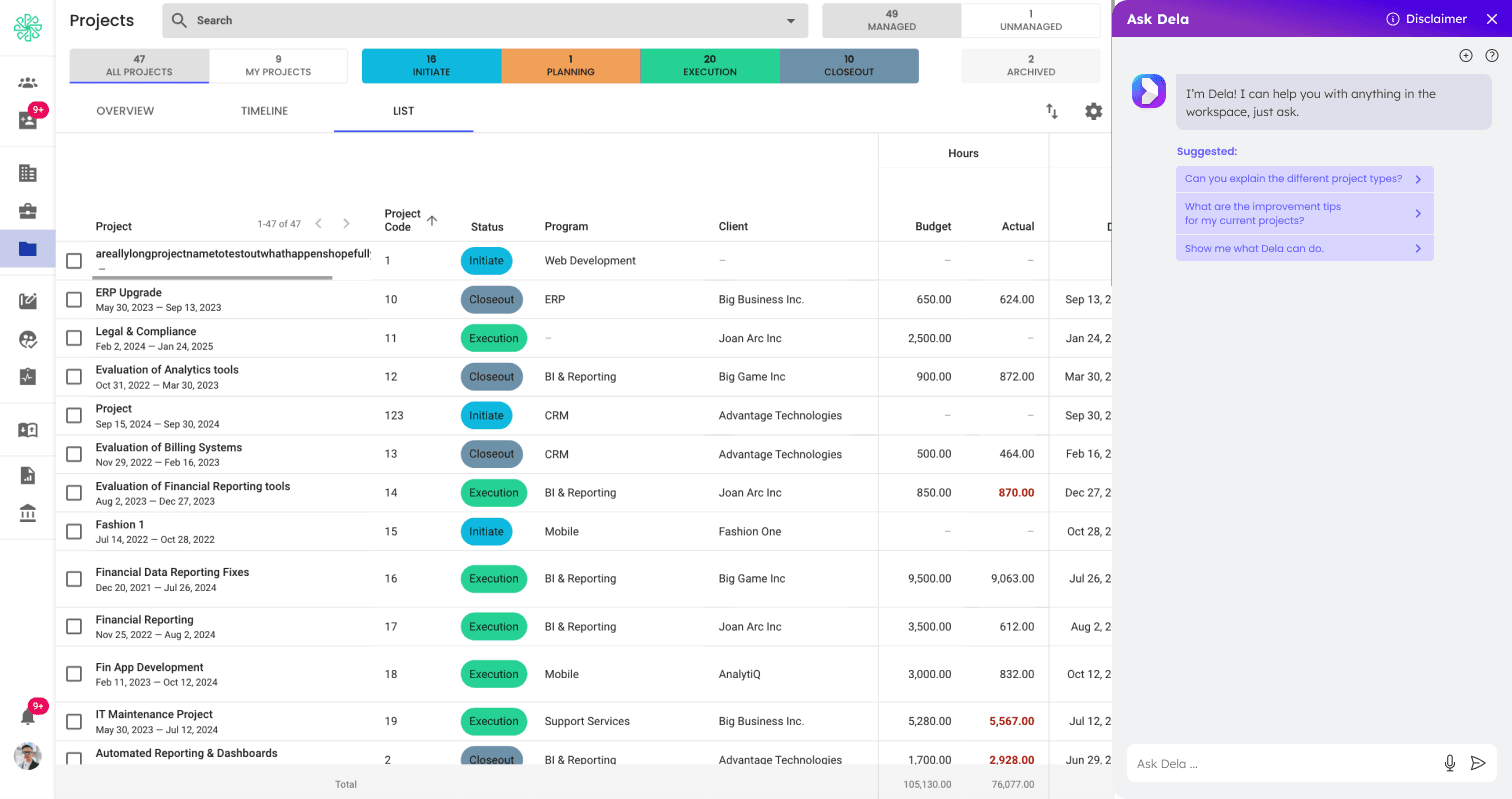
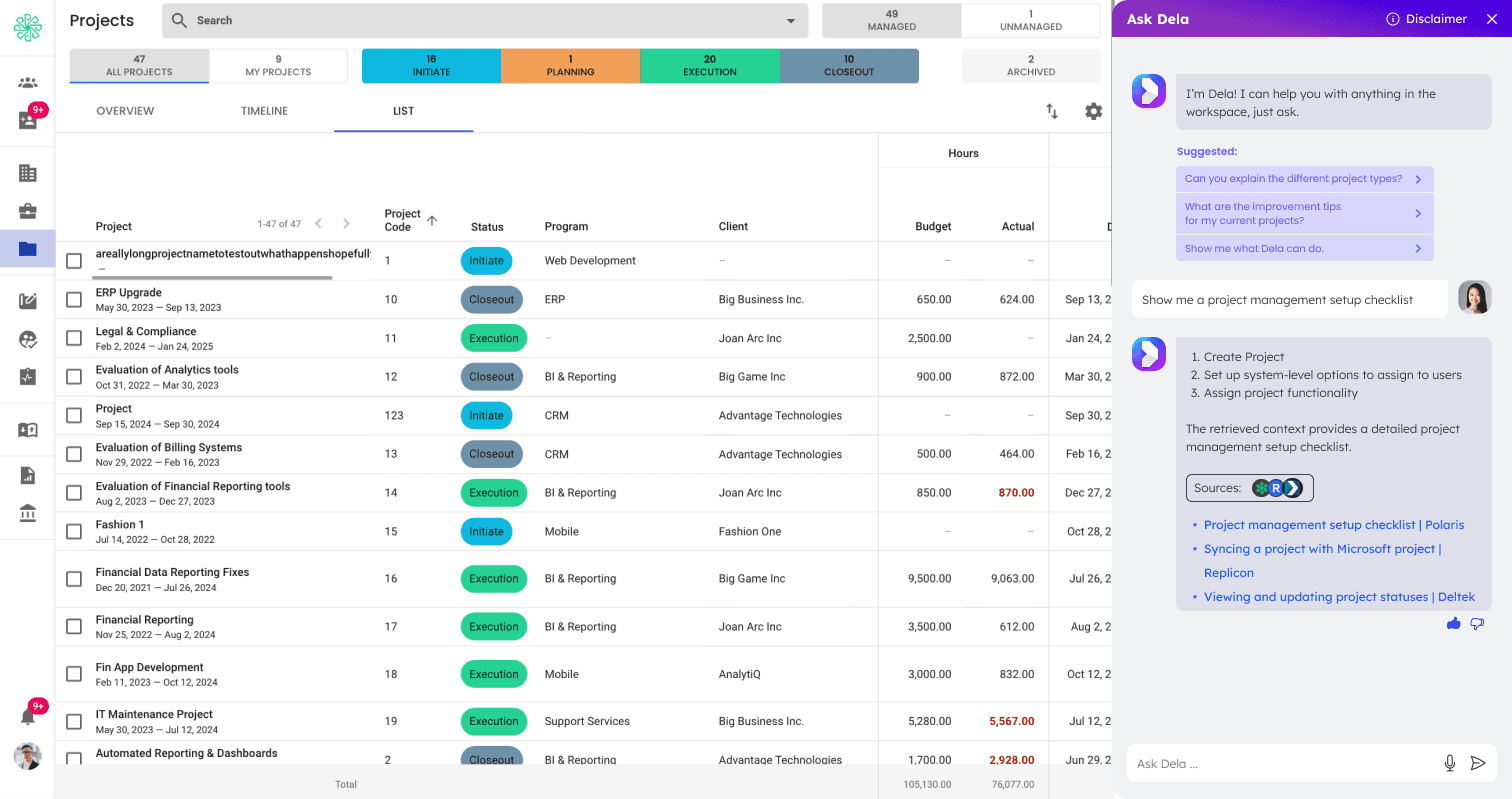
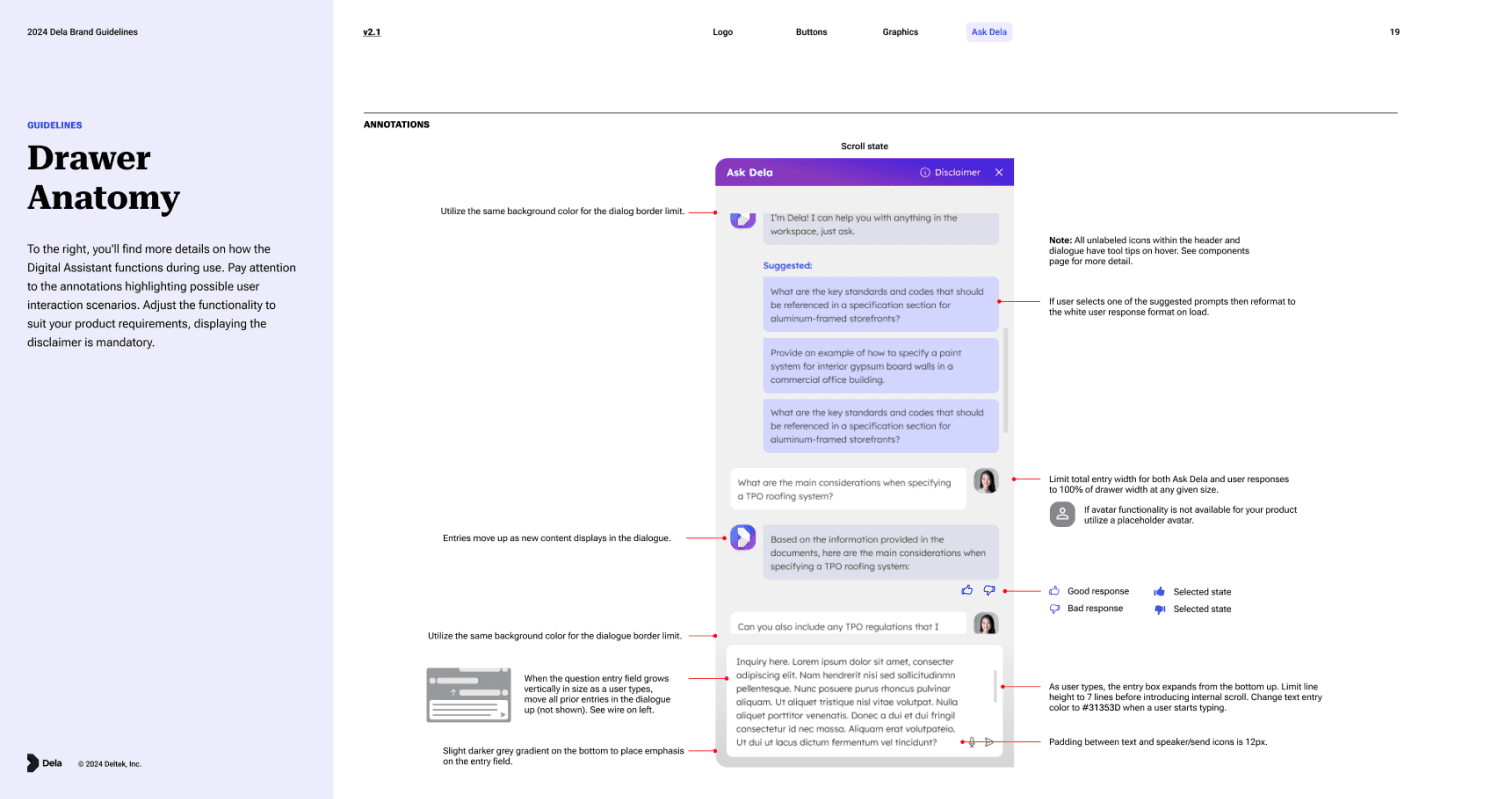
Designing the conversation, not just the container. The chat surface is standardized UI; the design lives in how Dela responds. Deciding on a tone that fit our product (couldn't be too casual), how it handled questions outside of scope (providing sources or prompting users to expand further on an input), and the behavior when it's not confident (would express it didn't know, would ask user to clarify or take a suggestion action) all contributed to an assistant that was a useful tool, not just a demo.
Consistency across the suite. Dela shipped across the Polaris product suite, so its behavior and voice had to hold up across surfaces. Dela's intial model was too friendly and casual which didn't fit our enterprise level product. The data science team was able to give it a more neutral, professional voice through a defined persona, and specific rules fed with examples.
Interactive Demo
Most of what I can show from the shipped product is Dela answering questions. Informational, safe, and, frankly, the part that's easiest to build. The harder design problem, and the reason I judged success by task completion rather than engagement, was making Dela reference a user's actual data and propose a specific next step, not just explain a concept. Below is a rebuilt version of that harder case: watch what happens when the question moves from "what does this mean?" to "what should I do?"
Try it → Ask an informational question first, then the one that matters: what needs attention in these projects right now.
Recreated demo, rebuilt from scratch in Lovable. Production data, client names, and branding removed. The task-specific answer is illustrative, built to demonstrate the design intent rather than pulled from a live model.
The gap between these two answers is the design bet: an assistant that explains is a feature. An assistant that references your actual work and tells you what to do is a tool people come back to.
How I worked with AI
This is the project where AI tools were most central to my process:
I designed the conversation itself in ChatGPT: drafting and iterating system prompts, testing tone, and running failure cases. I tested using ambiguous questions, out-of-scope requests, and wrong-but-confident answers before any UI existed.
Judgment moment: The bot confidently answering things it shouldn't, for example, incorrect project health. Now, if Dela doesn't have sufficient data to give a completem and correct response, it will admit that and give the users some follow-up options.
Outcome
PMs reported completing workflows faster than before based on the usability sessions we ran. 13 of 15 participants completed the workflow using Dela during testing.
Shipped across the Polaris product suite. We've seen steady weekly queries around 25 per user, and an uptick in deflected tickets.
Initially viewed internally as a marketing feature; usage data showed users returning to it for real work.