AI Project Risk
Turning model predictions into risk signals PMs actually act on. 90% more critical risks surfaced, project delays down ~30%.
Overview
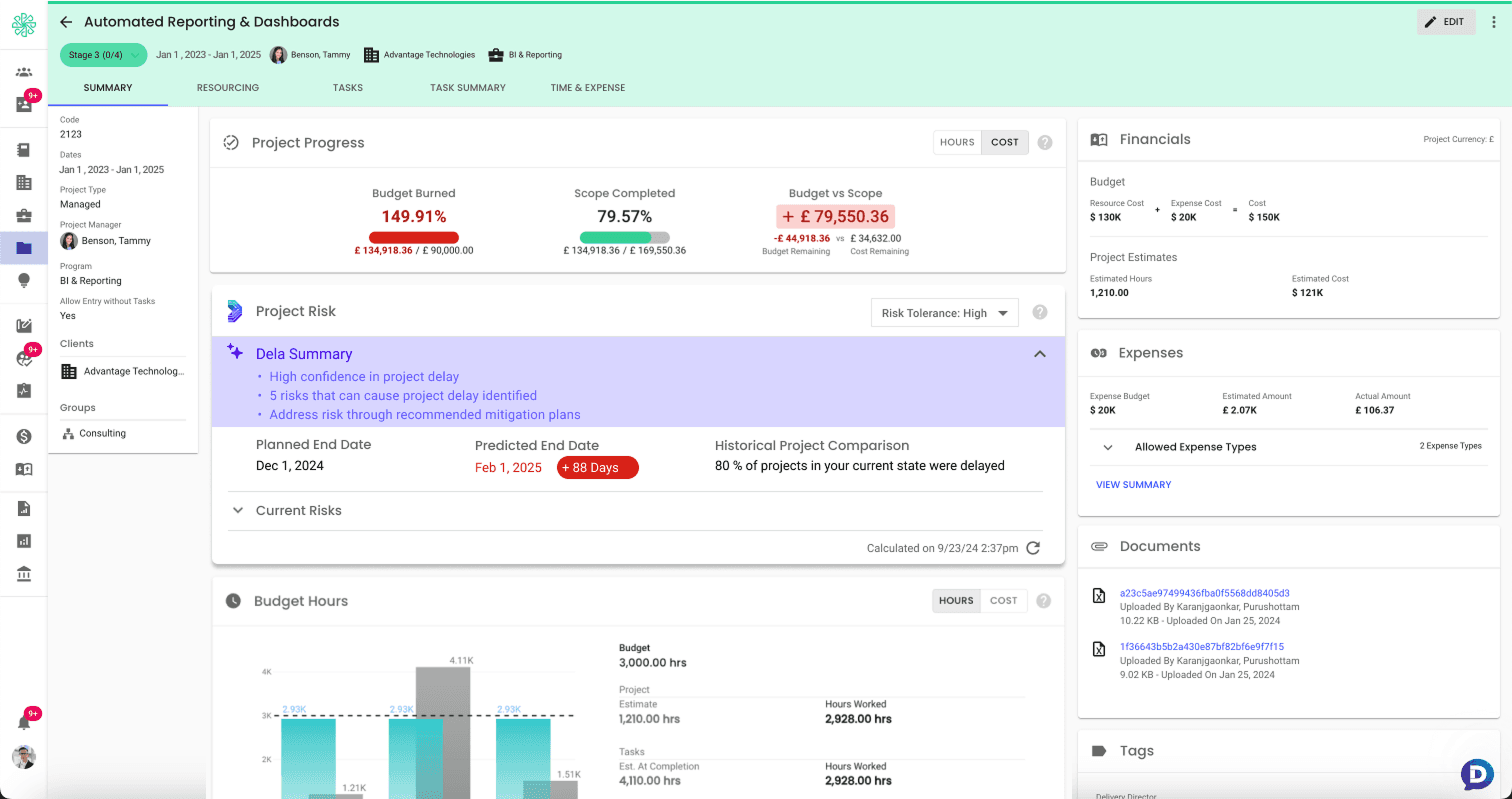
Project managers at Deltek found out about risk too late, buried in status reports, spreadsheets, and gut feel. We had a model that could predict risk; my job was making its output legible and actionable rather than just visible.
Problem
A raw prediction ("this project is 73% likely to slip") is a conversation killer. PMs can't act on a number they can't interrogate. The design problem wasn't displaying risk, it was answering "why is this flagged, and what do I do about it?" without requiring anyone to understand the model.
Constraints
Every signal had to be explainable. No black-box scores.
Flagging more risks could lead to alert fatigue; more wasn't automatically better.
Risks had to be actionable. Surfacing them wasn't enough.
Key Decisions
Signals, not scores. Instead of exposing raw predictions, each risk renders as an interpretable signal: what triggered it, and a suggested action.
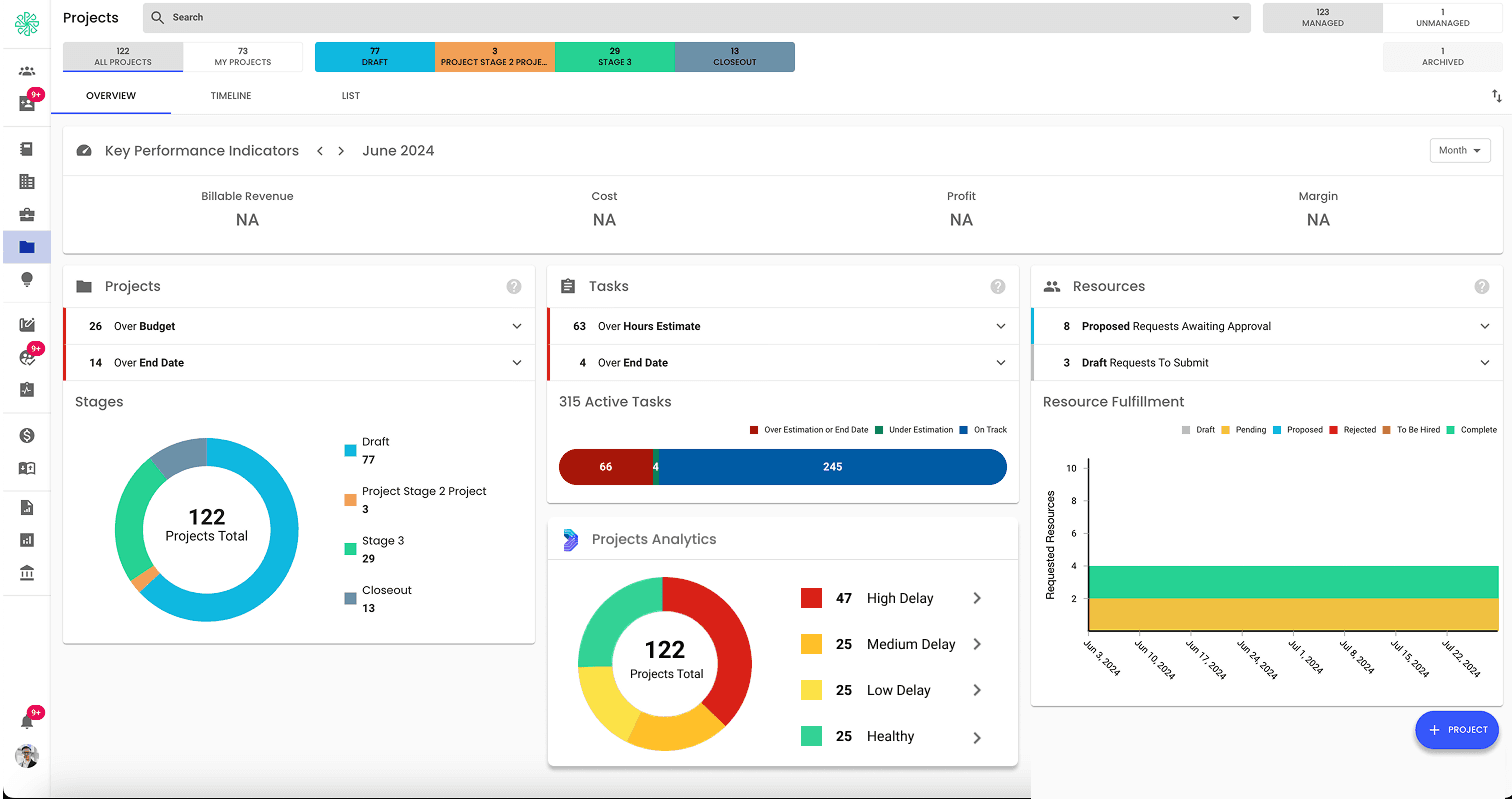
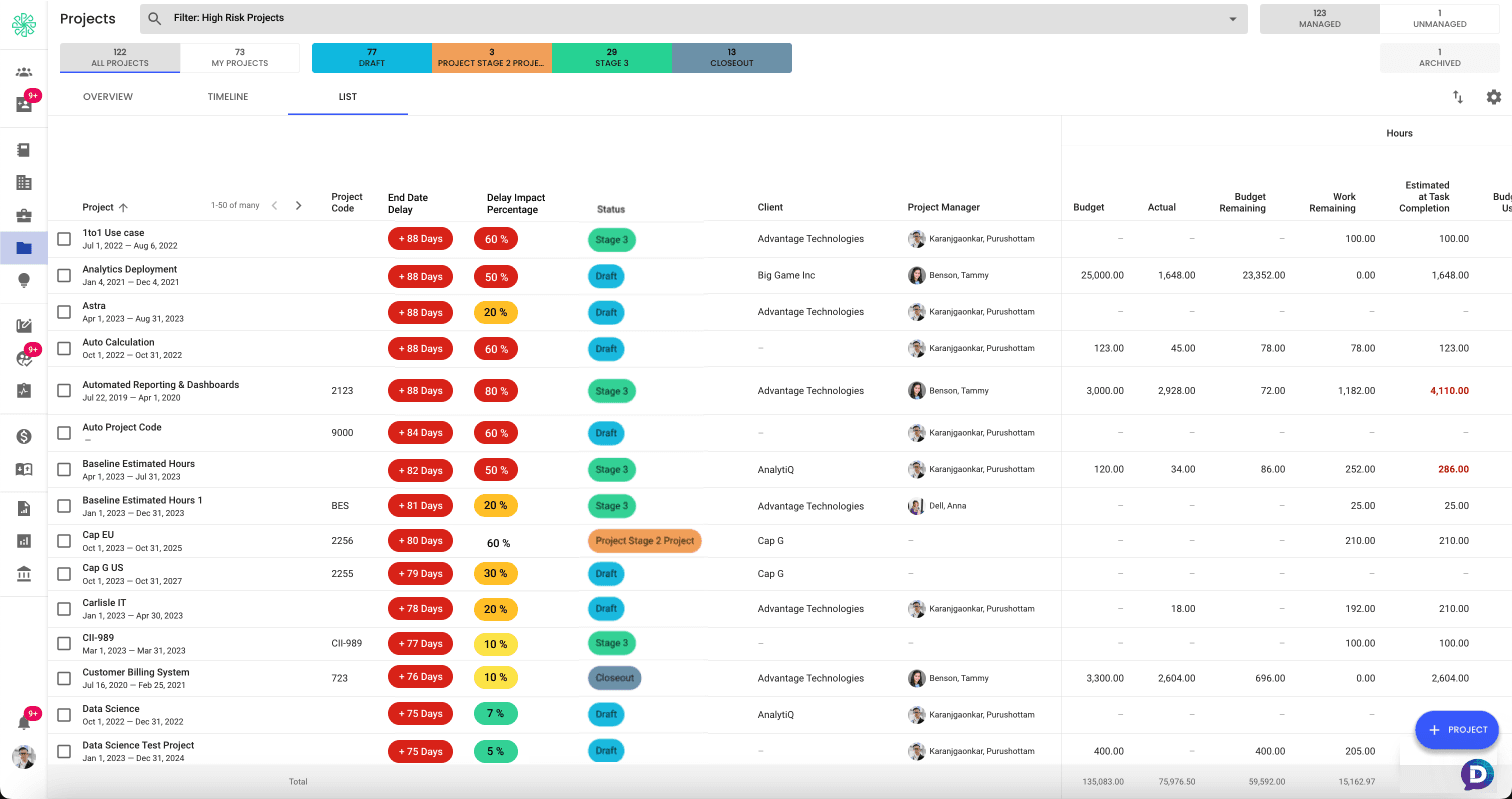
Designing against noise. To address alert fatigue, I tiered severities with color codes, and added a risk tolerance dropdown for the PM to decide how critical risks were on a project basis.
Working with the model, not just around it. The initial model was limited, and the data science team wanted to hardcode some of the risks. I pushed back on this approach because it would hurt the feature in the long run, particularly as we wanted to scale and add more risk types. I wanted the risks to be relevant across different industries/client types, and learn from past projects. They were able to add additional models to accomplish this.
How I worked with AI
I used Claude to simulate skeptical PM questions for each risk and to pressure-test the explanation copy.
AI drafted an explanation that was technically accurate but useless to a PM. I had to validate them against PM personas.
Another designer had started this feature before I took it over. Rather than begin from zero, I used Claude to quickly generate variations on their existing designs so we could settle on a direction fast.
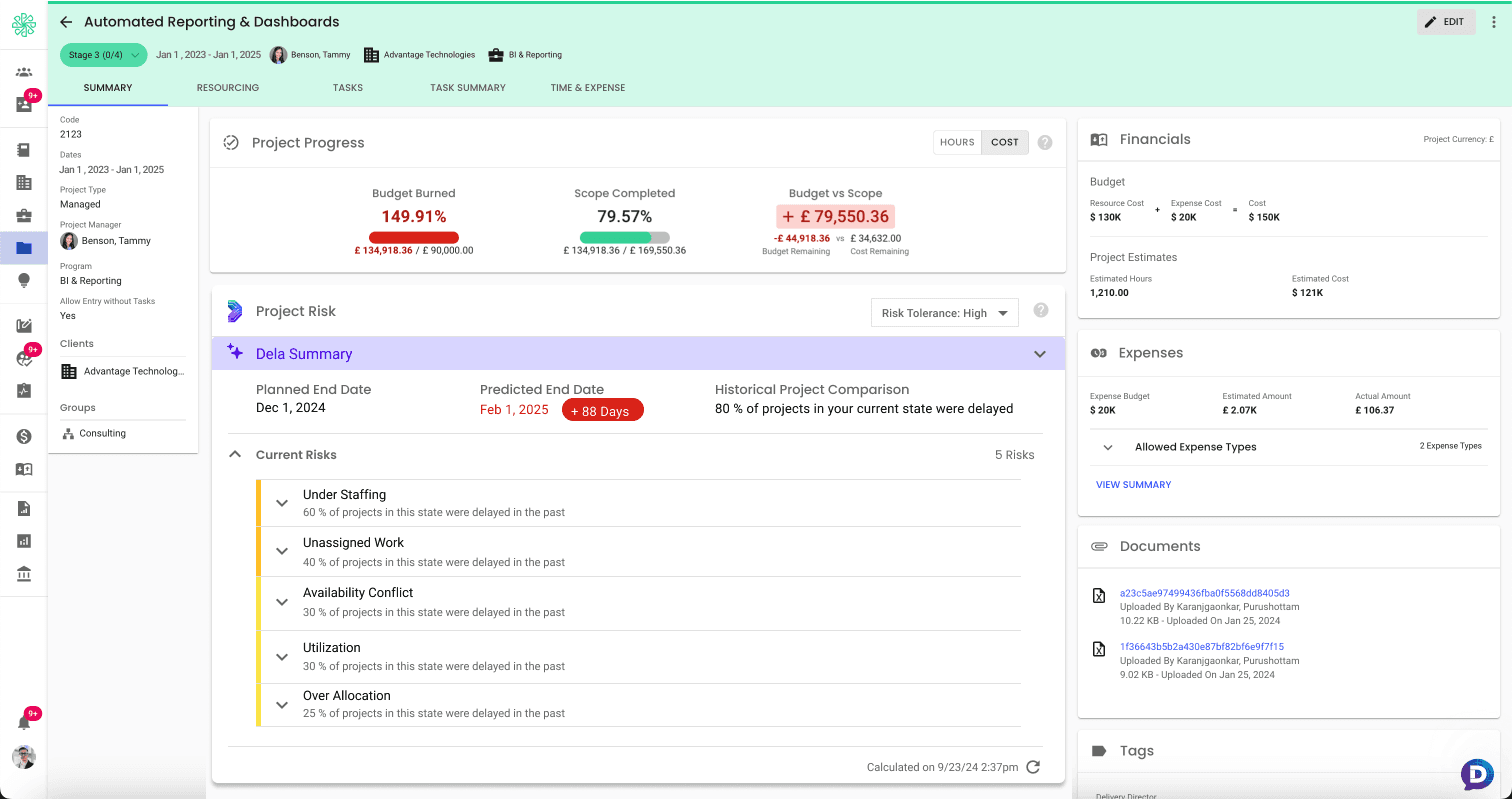
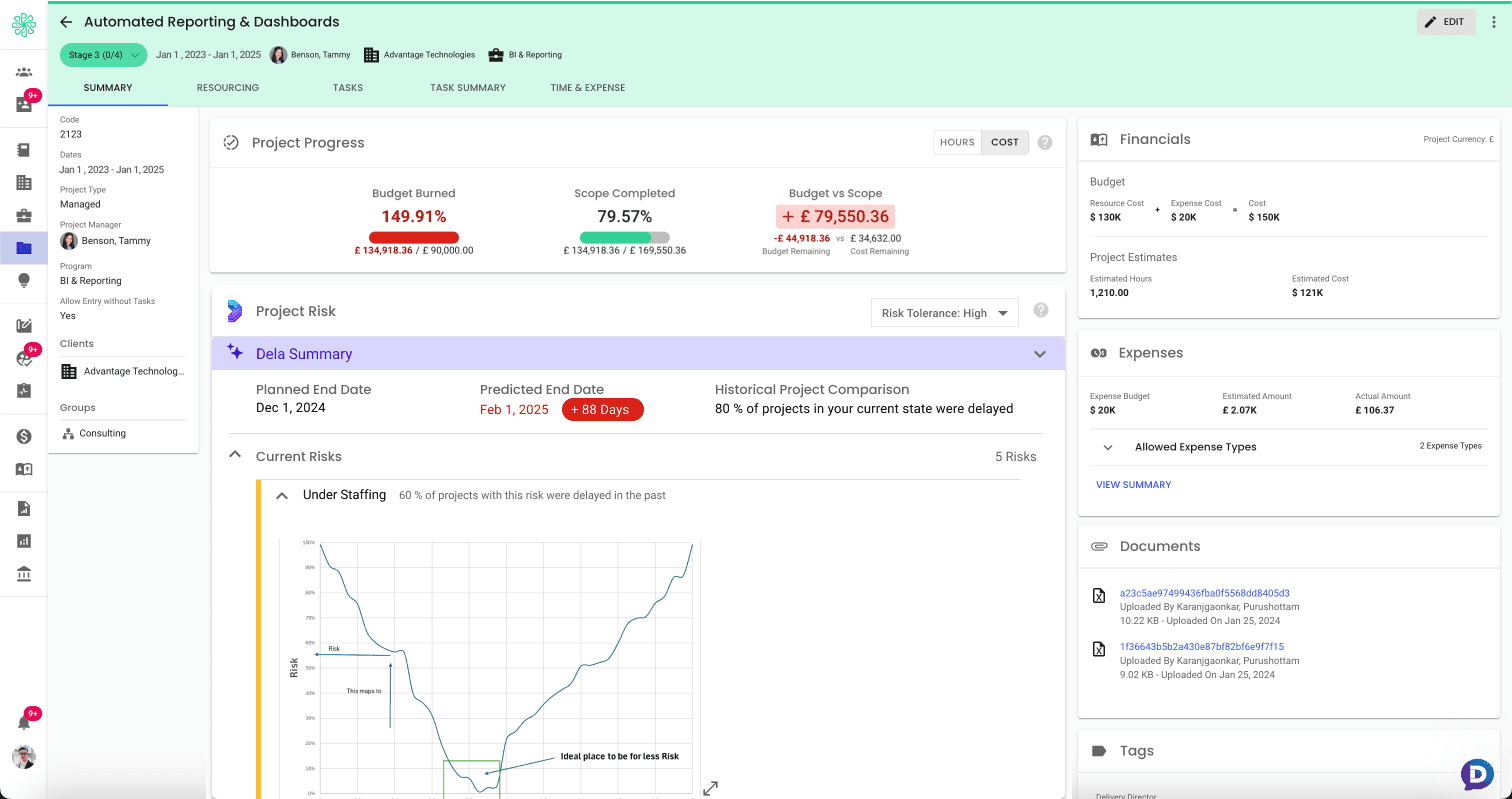
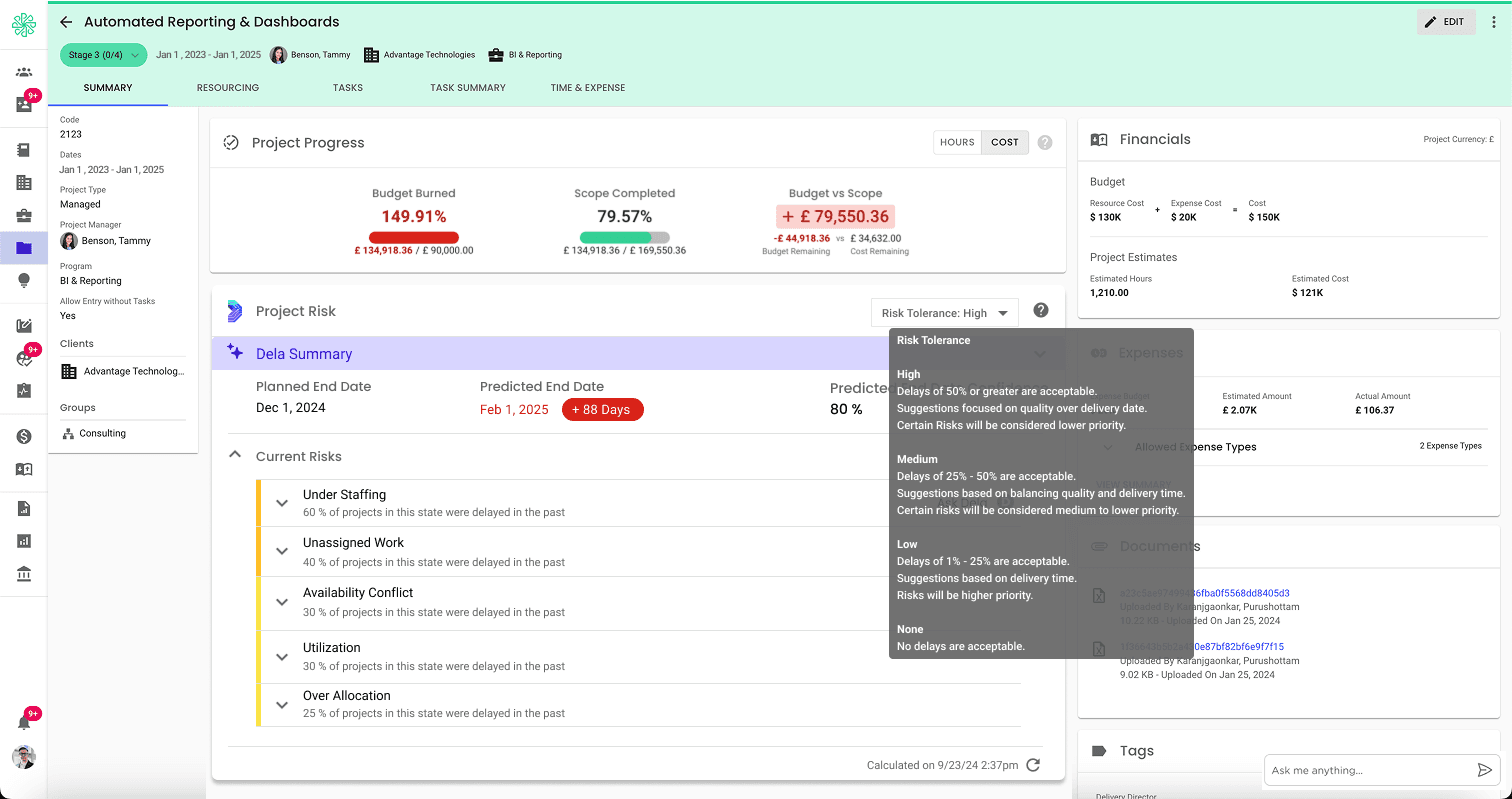
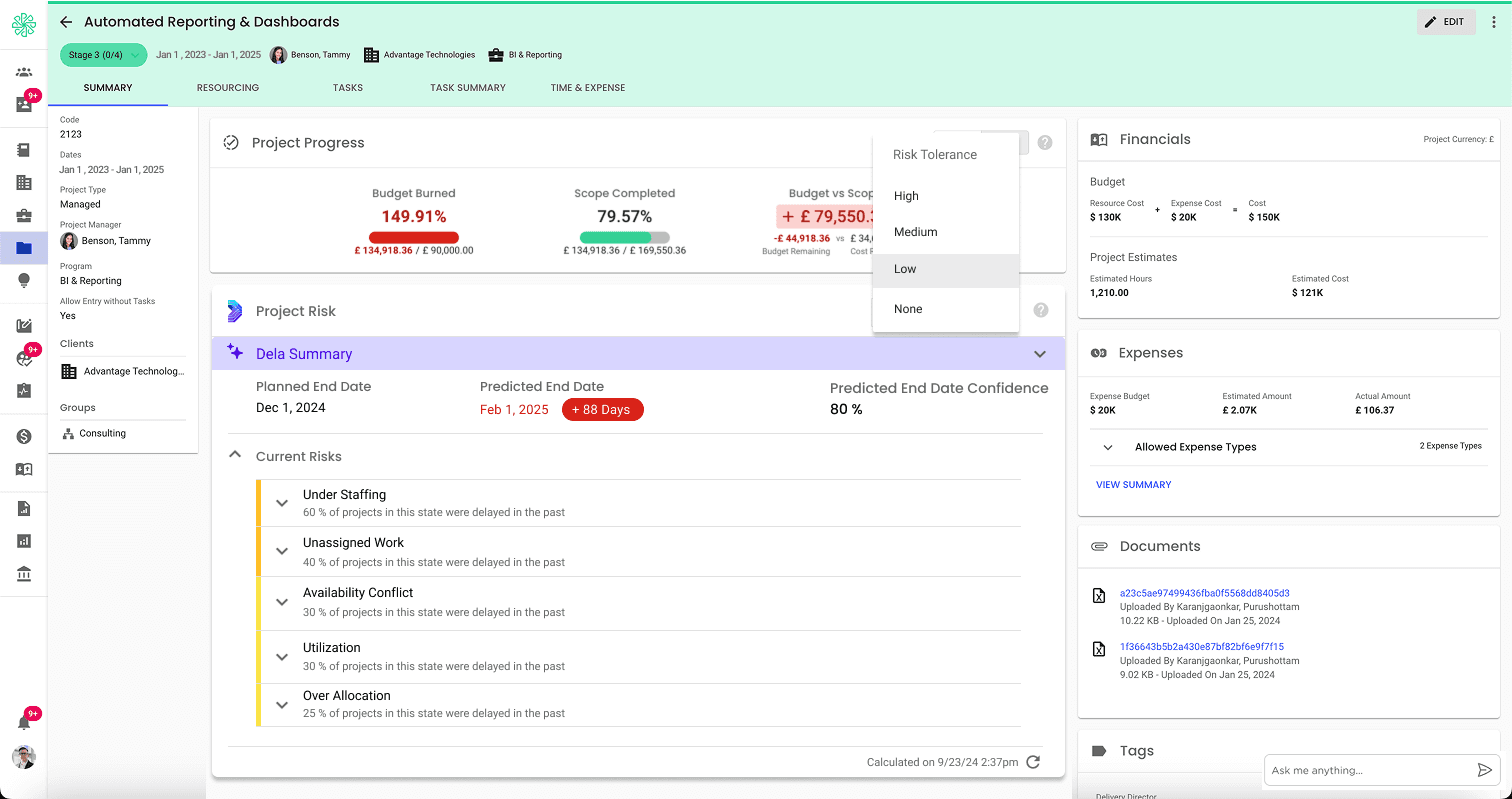
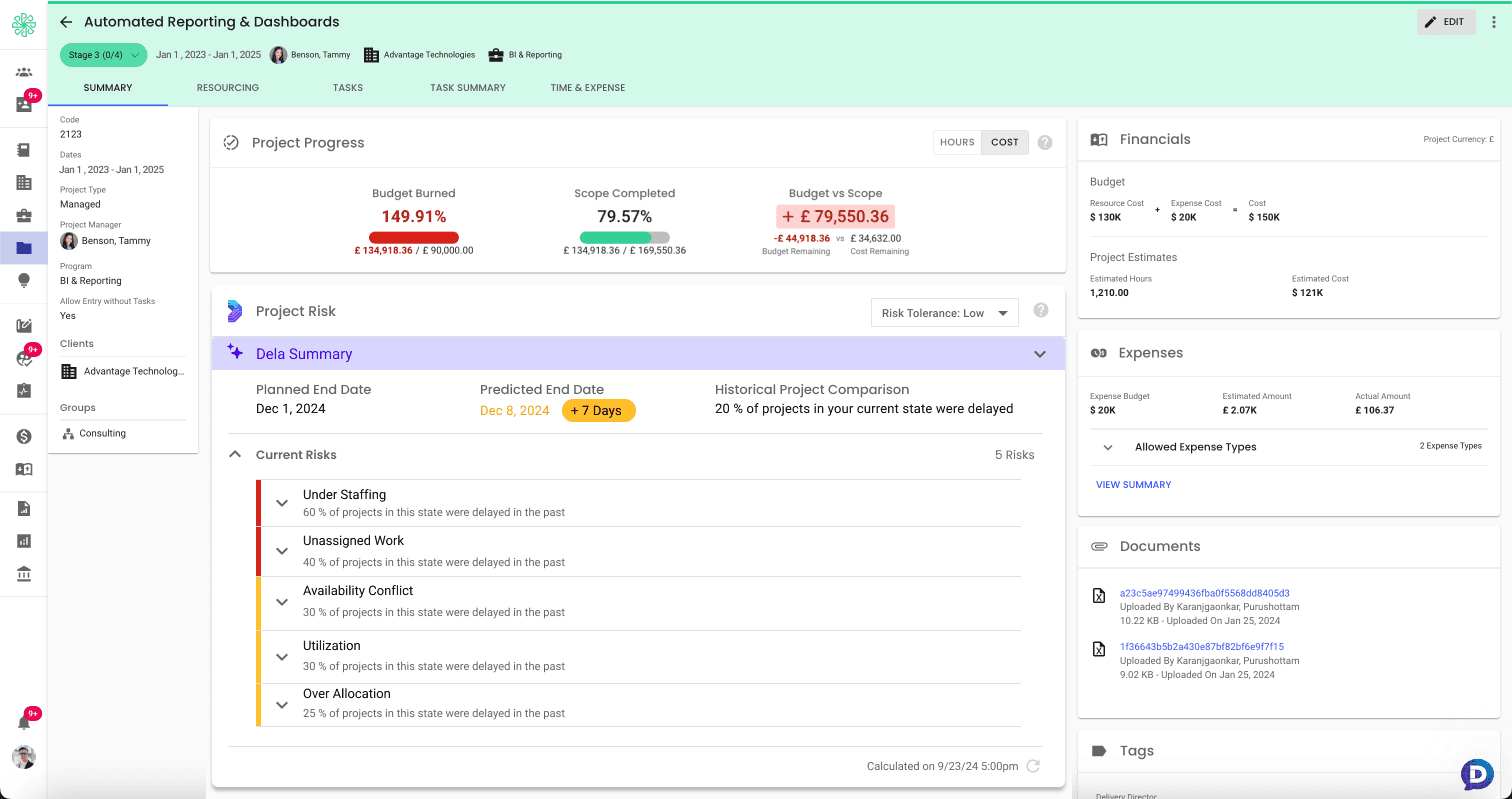
Try it → Open a high-risk project, expand a risk signal, and ask Dela for a mitigation plan.
Recreated demo, rebuilt from scratch in Lovable. Production data, client names, and branding removed. Interaction reference only.
The design bet here: a PM who can see why a risk was flagged will trust and act on the recommendation that follows it. A number alone asks for faith. Evidence asks for a decision.
Outcome
Surfaced 90% more critical risks than the previous manual process compared to the legacy workflow. PMs rated the risks as actionable in testing.
Teams using it saw ~30% fewer project delays within the next quarter, tracked by on-time milestone completion.
The pattern that stuck: AI that supports PM judgment instead of replacing it. Mid-market client adoption with enterprise on the way.